Aerzen USA insights and guidance for blower, compressor and vacuum pump applications

Current Articles | RSS Feed RSS Feed

Considerations when specifying and purchasing a screw compressor

Buyers have many alternatives when considering which style of compressor is most appropriate for their process requirements. These can include:

1)  Type of compressor:  positive displacement or dynamic

2)  Type of compression:  oil free or oil injected

3)  Construction of compressor:  gastight, hazardous gas or atmosphere, compressor metallurgies, instrumentation, motor type and manufacturer

4)  Operation of compressor:  variable ambient conditions, variable flow and/or pressure requirements, variable properties of the air or gas

Type of compressor is the first and most important selection criteria.  A dynamic compressor will typically provide for small fluctuations in flow and discharge pressure through the use of guide vanes and/or throttle valves.  These compressors operate in-between choke and surge regions and the vanes/valves help the compressor to run at its most optimal point.  With the use of VFD the flow/pressure curve can be shifted on the performance curve to provide some variability.  

These compressors are well suited for applications in which the flow/pressure doesn't vary more than 30%, or the ambient conditions or air/gas composition doesn't exhibit swings of more than 30%.  The positive displacement compressor will provide a relatively constant flow regardless of what the pressure requirement is.  With the use of a VFD this machine can provide for many applications with varying flow and pressure requirements.

The positive displacement is typically simpler than a dynamic compressor since it does not require the use of guide vanes, throttle valves, or sophisticated instrumentation.  Finally, the buyer will need to determine if the compressor will need to be 100% oil free or oil injected.  The oil injected machines can include oil separation and filtration to lower the oil content in the gas down to a few ppm.  Some applications can handle this while others cannot, especially if the downstream oil accumulation over time is detrimental to the process.

In addition to the type of compressor, the buyer will need to consider the installed environment and duty cycle of the compressor.  Consideration may need to be given to gastight components or special construction for hazardous or classified areas.  They buyer may also want to specify plant standard instrumentation, motors, etc.  Also, care must be given to changing conditions or the air or gas that is compressed.  Can the air/gas be dirty?  If so, some compressors (usually dynamic types) are very sensitive to dirt or solids in the air or gas stream.  This could include moisture or humidity of the air or gas.  

Is the compressor installed outdoors?  If so, can it handle the extremes from winter to summer?  This not only pertains to the temperature that the compressor is operating in and how it affects the lubrication and metallurgy of the parts, but also to how the air or gas properties will change.  The buyer will need to consider changing environmental conditions as well as changing process requirements to determine if the compressor selected can handle the wide array of performance points.

Aerzen USA - George Hubbard

George Hubbard
ghubbard@aerzenusa.com

Applying the proper flare gas compression technology

 The refinery flare gas can be considered one of the most challenging, but it can be handled with the right compressor.

So how can we compress flare gas from a refinery?

Several types of compressors are being used. 

Centrifugal compressors should not be recommended in refinery flare gas applications because they cannot easily deal with wide swings of mole weight and are sensitive to any solids or liquids entrained by the gas stream. 

Positive displacement machines are best suited for these conditions because they can handle easily wide changes in the composition of the gas.  I know of five types of mechanical compressors being used, more of less successfully in flare gas applications:

  • - Sliding vane compressors
  • - Liquid ring compressors
  • - Reciprocating piston compressors
  • - Oil-flooded screw compressors
  • - Oil-free screw compressors

Each of these technologies has its place and can be successful when applied correctly. 

A few pros and cons of each of these types of machines:

Sliding vane compressors are simple compressors with a single shaft off-center in a cylindrical housing.  They work best in low pressure clean gas applications.  They are not very reliable when dust or liquid is ingested in the machine and prevent the vanes from sliding back-and-forth in the rotor slots.  Jacket-cooling is required and oil needs to be injected continuously for lubricating the vanes that slide along the housing.  They may require relatively frequent overhauls, but these are relatively easy to handle. Initial costs are low.

Like the sliding vane compressors, the liquid ring compressors are also simple machines. The principle of operation is very similar to that of sliding vane compressors with the exception that a ring of liquid, generally water, is used instead of vanes that slide radially.  Liquid ring compressors are therefore well suited for wet gas, dirty gas applications.  The gas maintains a low temperature during compression as the heat is absorbed by the liquid.  These compressors are available in a variety of materials to handle a wide range of gases.  As compressors, these machines are not very energy efficient, as it takes power to maintain the liquid ring in proper motion under all operating conditions. Moreover, the liquid will scrub and cool the gas.  This requires the liquid to be treated, before being discharged, and also cooled, filtered if it is used in a closed loop.  Of course, large amounts of water are not available everywhere and special measures may have to be taken in cold climate.

Reciprocating Piston compressors are well known and very efficient machines that can handle high compression ratios and high discharge pressures.  Piston compressors exert alternating forces on supports and foundations and produce pulses in the gas stream that need to be attenuated in pulsation dampeners. Valves and piston rings are the components that are most sensitive to solid or liquid contaminants and do nor handle well gases that may polymerize in an accelerated manner.

Oil-flooded screw compressors are compact rotary positive displacement machines. They do not require heavy foundations.  One rotor drives the other and oil is injected in the rotor chamber to lubricate the rotors, remove the heat of compression and seal the gap between the rotors and between rotors and housing.  These machines are very simple, can reach in a single stage high compression ratios and achieve very good efficiency levels. The challenge is that the oil will scrub the gas of its contaminants and the oil may react with the gas.  As a result, the oil may loose its lubricating properties, acid could form, and in some cases a gel like substances may develop.  Therefore, precautions must be taken to avoid frequent oil changes, maintenance and repairs. An oil-flooded compressor therefore cannot be recommended in all applications.

The one machine that finds itself "at the intersection" of all the previously mentioned ones is the oil-free dry screw process gas compressor. Unfortunately, its initial costs may be the highest probably in the range of reciprocating compressor solution.  However, the higher investment may be worth it because it combines the advantages of the above mentioned compressors without combining their individual disadvantages.

  • The oil-free compressor is a rotary positive displacement machine that handles wide swings of mole weight and gas composition
  • It does not require special foundations
  • The process gas side of the machine is completely separated from the oil side by 4 internal seals. Therefore, the oil cannot be contaminated by the gas.
  • The compressor can handle contaminants: solids and liquids and water or solvents can be injected intermittently or continually for cleaning and for cooling if required.
  • The rotors are almost naturally self-cleaning, however, liquid injection may be required to remove substances that may stick to the rotors or the casing and accumulate in the inlet or discharge channels.

What is Aerzen's experience in this field?

Aerzen began supplying compressors for flare gas recovery to clients in Europe already some forty years ago. The machines for this application have been in the range between 500 cfm and 5000 cfm (15 to 150 m3/min) and discharge pressures from 30 to 190 psi (2 to 13 bar g) with the bulk of them around 90 to 100 psig (6 to 7 bar g).  These machines are either single-stage or two-stage compressors with inter-cooling to achieve best efficiency.  However, single stage machines are also used and may require constant water injection.  The water flow requires varies of course with the gas, temperature, pressure and materials used.  The amount of water is very small: in this particular application, typically less than 1 GPM / 1000 cfm of gas.

The oldest installations in North America are in Canada.  In the early 1980s, several refineries, were equipped with Aerzen dry screw compressors for the compression of flare gas.  These have been compressing 4000 cfm of gas to 95 psia.

Aerzen USA - President - Pierre Noack

Pierre Noack - President
Aerzen USA
pnoack@aerzenusa.com

Things to consider when making blower purchasing decisions

Sizing - Proper sizing of the blower begins when the buyer provides performance requirements to a blower manufacturer. The buyer should understand the differences between scfm (volumes at standard conditions) and icfm/acfm (volumes at intake or actual conditions).  Knowing the ambient conditions (elevations and temperature ranges) and the required operating pressures which the blower must produce will also effect the manufacturer's selection.

Performance - Only buy Aerzen's blower packages... just kidding, but there is a serious point here.  Any manufacturer's claims of performance need to be verified to insure the correct amount of pressure will be generated for the application.  Insist on knowing the performance and efficiencies (power requirements) of the complete blower package you buy not just the performance of the bare stage.  An undersized drive motor will limit performance.

Package design - Buy a complete package from the manufacturer when possible.  A package assembled by others can consist of mismatched components that could have a negative impact on the blower's performance, and ultimately, its warranty.

Pricing - I put this last, because it is the least important component in the blower selection process.  A decision based solely on a lower up-front capital cost can end up costing much more in the long run when cost of ownership is evaluated and the inappropriate, and possibly, less reliable equipment was selected.

Aerzen USA - Industrial Specialist - Steve Lungstrum

Steve Lungstrum
slungstrum@aerzenusa.com

Top questions to ask when buying a blower for a Pneumatic Conveying System

Are you ready to buy a blower for a pneumatic conveying system? Look out for the following:
  • Is the blower sized for the correct amount of air? Too much air will lead to higher pressure drops and increased power consumption. Too little air will result in line plugging.
  • Is the blower and motor sized with enough safety to overcome upset conditions?
  • When comparing blowers from various manufacturers, did you look at:
  • Reliability
  • Efficiency
  • Noise
  • Maintenance requirements
  • If you are conveying food products, you also want to make sure that no particles of the silencer absorption material and no lubrication oil can enter the compressed air stream and thus mix with the conveyed product.

Feel free to comment or contact me to discuss.

Aerzen USA - Industrial Specialist - Karl Mueller

Karl Mueller - Industrial Specialist
Aerzen USA
(770) 951-7035
kmueller@aerzenusa.com

All Posts

Subscribe to our blog

Your email:

Current Articles | RSS Feed RSS Feed

Experts fix what needs fixing

Submit to Digg digg it | Submit to Reddit reddit | Add to delicious delicious | Submit to StumbleUpon StumbleUpon 
This is directed to anyone who owns and operates any plant in any given industry.  I am in awe.  This is the year 2009 where saving money is more important than ever and yet unplanned emergency repairs costs due to run-to-failure as well as the dated run time based maintenance drain your manpower and cash reserves more than ever.  Do not get me wrong, there are pre-existing conditions that you sometimes cannot prevent, or your organization has done it for so long that the cultural change will take years for you to change. 

Ideally, anyone in charge of maintaining equipment - especially the ones of you who responsible for the budgeting - should sit on a rock and ponder how your organization can implement what I call Precision Maintenance philosophy.  No rocket science or big costs involved here.  It just describes the process of setting up trending your assets precisely.  The precise part is divided into three similarly important yet mind boggling simple steps:  Plan - Do - Review. 

In the planning phase is the toughest part.  You prioritize which items are the most important to trend.  Do not be shy to start monitoring machines that seem to have low capital cost.  You will be surprised how much low cost machinery really cost you when you review the total costs of ownership (i.e. energy, failure history, etc.) .  Reliable trending is best done with vibration analysis, oil analysis, Infra Red imaging, power consumption, load, pressure and many more.  There is awesome instrumentation out there that does not cost much to buy is easy to install and integrate into your plant operating system.  If real time monitoring cannot be done, you will need trained manpower that will walk scheduled routes and record the data for you.  If necessary, pull in your OEM (Original Equipment Manufacturers) to help establish alarm and shut down values for any of the parameters that you are recording. 

The Doing part comes easiest to most of us.  With an increasing trend of troublesome data the machines that seem in need of attention have to be pulled, evaluated and eventually repaired.  Make sure to record any abnormalities in the tear down and inspection reports and compare them with the machinery trends.  Ask yourself if the failure symptoms are linked to the trend information, for instance defective bearings and an increase of vibration.

The most forgotten part is the review phase of any of your activities.  Immediately upon repairing or even installing a new machine you need to take a set of data - did you really address the root cause of a problem or merely a symptom of it?  If it is the former, you can go about your daily business.  If it is the latter, your job is not done yet.  Now is the time to tenaciously finding the reason what is causing the abnormal values. 

With Precision Maintenance you can easily save tenths of thousands of Dollars every year.  Make sure you make good use of that knowledge in the ROI (Return Of Investment) calculation - the more instrumentation you can afford the better.  For blowers and compressors there are many standardized platforms we could help you with.  As always, I am looking for your feedback. 

Aerzen USA - Technical Director - Ralf Weiser

Ralf Weiser - Technical Manager
Aerzen USA
rweiser@aerzenusa.com

Listen to Ralf Weiser's Podcast on Expert Level Maintenance

Do you believe in everything you see and hear about Turbo Blowers?

Submit to Digg digg it | Submit to Reddit reddit | Add to delicious delicious | Submit to StumbleUpon StumbleUpon 

Do you believe in everything you see and hear about Turbo Blowers?

That is a loaded question.  Especially here in North America we tend to be drawn to the "New" and the "Better" like a moth to a light unlike any other society that I know. In the last couple of years there has been an increasing amount of incredible power saving claims by single shaft turbo blower and compressor companies in comparison to positive displacement machines such as our own GM and VM Generation 5 Delta Blower and Delta Screw series.  When you look behind any claim, is there not usually the typical "it depends" clause that must be considered?  Typically this takes time and effort and thus it is no surprise that only few people give this further consideration. 

We felt like we should put the different technologies and compare it in a realistic context and compared the different primary air moving technologies.  You can down load the white paper from our web site and learn about the pro's and con's of the different machine types.  You will be positively surprised about the depth and volume of information that the author Pierre Noack compiled for you.  I truly believe in one thing:  Nothing is either universally bad or good - with very rare exceptions and those usually involve two legged ones. 


Ralf Weiser
rweiser@aerzenusa.com

What not to forget when you correct rotating equipment problems

Submit to Digg digg it | Submit to Reddit reddit | Add to delicious delicious | Submit to StumbleUpon StumbleUpon 

What not to forget when you correct rotating equipment problems...

You've just finished repairing a machine for the umpteenth time and you are exhausted because it could not be done in a single shift.  A couple of months later you find yourself doing this again.  Does this sound familiar to you?  Do not be afraid to admit it, this is a rampant problem at many different companies and settings. 

It was not until about a decade ago when I finally realized the step we usually forget about in this process:  Immediate and continuous review if anything we labored implementing really addressed a root cause or a mere symptom.  It sounds so easy and yet is so often either not done at all or not done in frequency and depth. 

There is a really basic principle I recommend for the root cause failure finding and subsequent remedying process.  First start to ask why the problem exists.  For every item you ask again why that particular issue could have caused the problem.  You do this for a total of five times.  By that time I can all but guarantee that you have found the real issue.  Devise a corrective action implementation plan and carry it out. 

Now comes the most important part:  Make absolutely sure that you carry out tests such as - but not limited to vibration analysis, oil analysis, infrared thermography, current draw, and so many others.  It would of course be best if you had baseline and perhaps even a history of data to compare with.  If the problem you started out with presents itself in the new review data you can at least preemptively start with corrective action again - without having to go through yet another repeat disaster.  This process also works in other plant and process settings, but that is for another Blog session.  Do you have any questions or comments?  Please feel free to drop me an email. 


Ralf Weiser - Technical Manager
rweiser@aerzenusa.com

Technorati Blog Claim: PAHWUPYNN6WY

All Posts

Aerzen USA Blog

Current Articles | RSS Feed RSS Feed

Hello Mechanical World please meet Mrs. Electronics!

Submit to Digg digg it | Submit to Reddit reddit | Add to delicious delicious | Submit to StumbleUpon StumbleUpon | Share on Facebook Facebook | Share on Twitter Twitter | Share on LinkedIn LinkedIn 

Hello Mechanical World please meet Mrs. Electronics! 

Positive displacement blowers and compressors have been around for well over 100 year.  Predominately process and maintenance folks have viewed them as mere mechanical devices that did not represent any worth in protecting and managing them electronically.  How dramatically different our world looks like today!  In a time where machinery is expected to fend for itself it makes great sense to monitor and manage your blowers and compressors and treat them as the assets they represent to your company.  The problem is how to best do it when you either buy new machines or systems.  Or how do you retrofit old blowers and compressors with systems that will later nicely integrate into your plant operating system? 

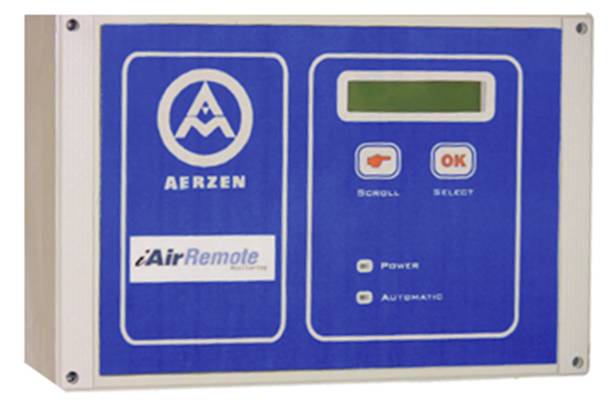
The system integration has always been one big obstacle in the integration process - next to cost of course.  Aerzen USA has generated a new approach to this challenge in form of our iAir Pneumatic Control Blower and Compressor control system that is offered as an augmentation to the already well known AS and ASG control platforms.  Here we have a controller

that is easy to use as it features a touch screen interface with all the pertinent information on a single screen shot.  If you want more information, simple touch the area of your interest and more details will show of on the display.  It can handle blower as well as single stage oil free compressor applications. In its basic version it can be connected to your plant system via Ethernet TCP, Modbus, Profibus or simply SCADA I/O's. 

Using instrumentation solves a whole variety of issues.  The most important one is that it protects against overloading or abuse of the blower or compressor.  Basic operating parameters are monitored and if necessary provide an alarm or shut down signal.  Another big ticket item especially in the construction phase of a new installation is that hard wiring cost can be greatly reduced by using a two-wire communication protocol that can connect at least up to 12 machines and still provide all the information as if you stood in front of the controller itself.  That is really powerful information for operators and plant managers alike.  Would you not want your machine telling you automatically that it needs attention?  How about uptime management that you would be able to do with it?  Please drop me an email if you are interested to learn more about how we can put money back onto your bottom line. 

Ralf Weiser - rweiser@aerzenusa.com

Techorati Blog Claim: PAHWUPYNN6WY

Right-sizing Aeration Blowers in Waste Water Treatment Plants

Submit to Digg digg it | Submit to Reddit reddit | Add to delicious delicious | Submit to StumbleUpon StumbleUpon | Share on Facebook Facebook | Share on Twitter Twitter | Share on LinkedIn LinkedIn 

Right-sizing Aeration Blowers in Waste Water Treatment Plants

As the main consumer of electricity in a wastewater treatment plant, the aeration system greatly influences the overall cost of operation, that in the longterm by far exceed the initial investment cost. Several blower technologies can be chosen from and it therefore behooves the engineer to accurately evaluate the characteristics of the aeration blowers and carefully interpret some of the claims made by various manufacturers. The most energy efficient solution must be based on actual conditions that, in reality, will vary over an extended period of time.

The economical operation of a wastewater treatment plant depends largely on the design and the interplay of the aeration and process controls. Moreover, the human factor and the management objectives are at the heart of the plant's reality and should also be taken into consideration. Selection and thoughtful integration of all the subsystems is of paramount importance.

Taking a pragmatic approach, Aerzen USA developed a whitepaper on the subject. This paper presents ways to minimizing the energy usage: right-sizing, aeration control, defining the operating range and matching the blower technology to the application, and comparing operating data over time.

The paper presents four types of blowers: two dynamic and two positive displacement machines. Since each technology has its place, a comparison is made specifically based on the treatment of wastewater. Taken into account are the daily and seasonal swings in oxygen demand, fouling and aging of diffusers, air flow control and turndown capabilities, total blower efficiency and energy consumption over time, mode of operation, blower accessories, and plant set-up. The paper recommends engineers to exercise due professional diligence and to select the most suitable aeration blower technology based on a relevant comparison.

To learn more about selecting to correct aeration blower for your application download the new whitepaper "Aeration blowers in the wastewater industry in North America"

Video:Tom McCurdy explains Right-sizing Aeration Blowers in Waste Water Treatment Plants

All Posts