
In the ideal world would we not all want to eliminate air filters altogether? If it was not for the fact that foreign material would be detrimental to air moving rotating equipment and the process that receives the air this would even be a possibility. Now that we must live with the filter elements, let us look what not maintaining it properly can mean to you.
In the realm of positive displacement machines most filters do not require cleaning before they reach a pressure loss of approximately 20 inches of water column (“H20). That is true for Aerzen filters as well. That is quite a bit restriction for a filter element. Let us put this in perspective: If you have a house that has an air conditioning system than you also have these neat “furnace” and “AC” filters. Most of them will collapse when they are subjected to more than 2”H20 restriction and your air flow really drops because the centrifugal fan cannot handle the restriction.
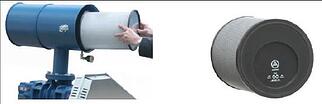
A positive displacement blower or screw compressor can easily deal with this inlet restriction and it will not affect the total air flow of the machine much as the rotor lobes positively trap the air within the housing and the rotor lobes.
While this is great news for the process that is supplied with this consistent amount of air, it still makes the blower or compressor work harder. Any amount of increase in inlet restriction will impact how the machine will operate. The restriction typically causes for the machine to run hotter than normal and thus would also cause for more Amperage draw from the motor that must overcome the additional pressure differential. Do not get me wrong here, we are only talking about a couple of Amps – but one Ampere difference on even a small motor can add up to thousands of dollars when you operate it 24/7/365.
The opposite side of the spectrum of how I have observed folks deal with filter maintenance is when they choose a coarser filter or take it out completely – yes, it is the year 2011 and yet folks still practice this. The practice renders a longer filter service interval and thus less maintenance cost – in theory. In really dusty conditions some maintenance managers must deal with weekly and in really bad conditions daily filter cleaning or changes. This is a significant cost factor that is deducted straight from the company’s bottom line. It is therefore understandable that solutions are sought to reduce the maintenance. Since positive displacement machines have a reputation for being rugged, OEM filters are sometimes replaced with much coarser elements and in some cases are completely removed. The filter maintenance goes down and the process may even be able to deal with the extra amount of foreign matter that now goes straight through the machine. What happens to the inside of the air mover though? The bigger issue can be erosion stemming from long term operation with fines going through the machine. Especially affected are the rotor sealing strip at the outer rotor diameter that seals against the main housing. This allows more hot air to re-circulate within the machine making it run hotter and less efficient.
Lots of wear can be seen on the tips of this rotor set.
There are ways to minimize filter maintenance cost and also not jeopardize machinery health and efficiency. Ducting the air intake to areas with less contaminant load is just one method. Another successful practice is installing a cyclone type pre-filter that removes most large particulate before it enters the main filter element. Even increasing the size of the filter can help extend the service life and thus reduce the manpower needed to maintain and check on the filter.
Please drop me a note in case you have comments, suggestions or questions.
Ralf Weiser
Technical Manager
Aerzen USA
rweiser@aerzenusa.com
